

Friday, April 10 2026
Source/Contribution by : NJ Publications
"The investor's chief problem-and even his worst enemy-is likely to be himself."
- Benjamin Graham
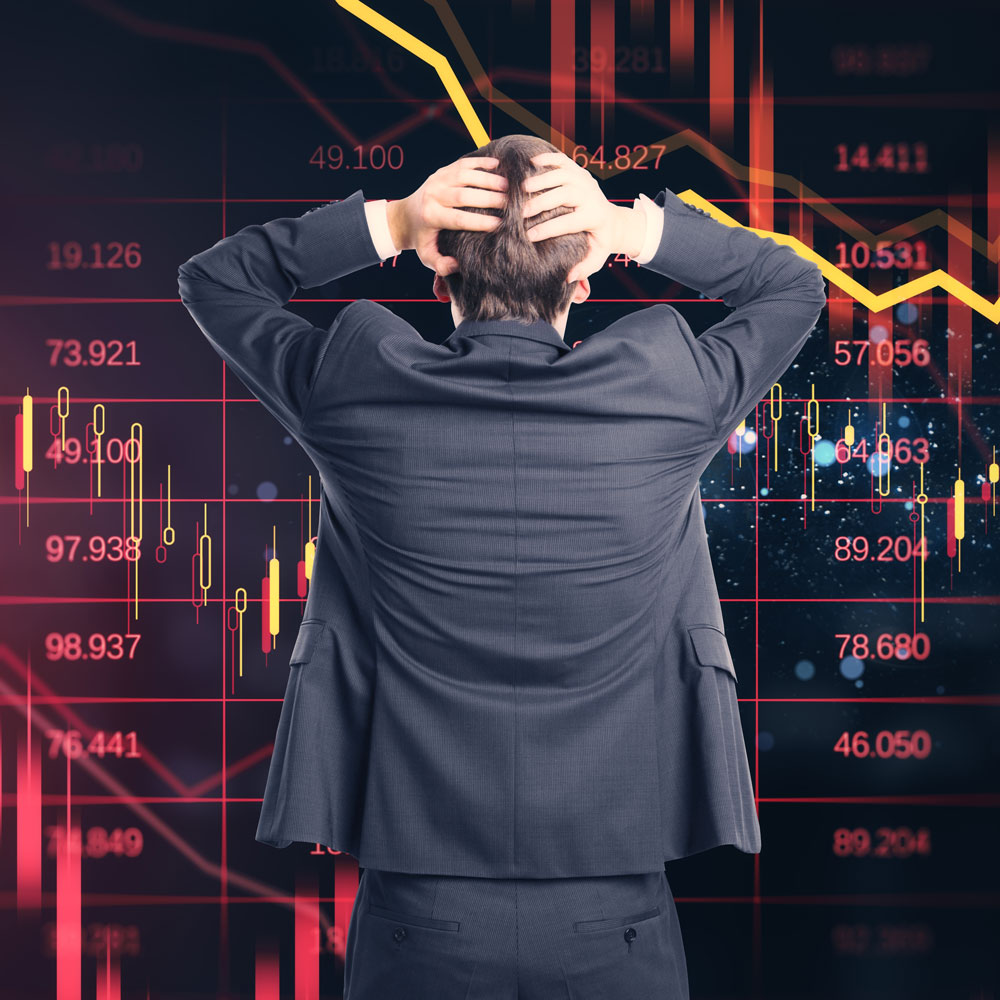
We like to think of ourselves as rational investors-calculating, long-term, and disciplined. But the moment the Nifty or Sensex flashes deep red, something shifts. Your heart rate climbs, your palms get sweaty, and that "Sell" button starts looking like an emergency exit.
If you've ever felt the urge to exit a perfectly good SIP during a market correction, don't worry-you aren't alone. Here is the fascinating psychology behind why we panic, and how to stay rational when everyone else is losing their heads.
The Pain of Loss Feels Stronger Than the Joy of Gain
In behavioral economics, this is known as Loss Aversion. Studies show that the psychological pain of losing money is twice as powerful as the joy of gaining the same amount.
When your portfolio drops 10%, your brain doesn't see a "temporary dip in NAV." It triggers the same neural pathways as a physical threat. To your subconscious, a falling market feels less like a financial shift and more like being hunted by a predator.
This is why many investors exit at the wrong time-not because of logic, but because of emotion.
The Recency Bias Trap
As humans, we are evolutionarily wired to prioritize recent information. When the markets have been green for months, we feel invincible. But the moment a crash happens, our brain tricks us into believing the downward trend will continue forever.
We forget the 10-year growth trajectory and focus entirely on the last 10 days. This Recency Bias is why investors often sell at the bottom-exactly when they should be buying more.
"In the short run, the market is a voting machine but in the long run, it is a weighing machine." - Benjamin Graham
The Social Proof (Herd Mentality)
For centuries, survival depended on staying with the group. If everyone around you was running, you ran too-without questioning whether the threat was real.
Today, that “group” has taken a new form-WhatsApp forwards, news headlines, and everyday conversations. The moment the narrative turns to “the bull run is over,” the natural instinct is to follow the crowd and move to safety, even if it means booking losses.
Constant exposure to such opinions and noise creates a sense that something is seriously wrong-when in reality, it may just be a normal phase of the market.
"Be fearful when others are greedy, and greedy when others are fearful." - Warren Buffett
How to "Panic-Proof" Your Portfolio
Understanding the "Why" behind your fear is half the battle; the other half is having a system to override it. When the market flashes red, your primary job isn't to "beat the market"-it's to manage your own behavior.
Here is your tactical roadmap for staying rational when the world feels like it's ending:
1. Zoom Out: Revisit Your "Investment Thesis"
Before you hit the sell button, ask yourself: "Has the reason I started investing changed, or has only the price changed?" If your objective is retirement which is 15 years away or a child's education in a decade, a 10-day market dip is a minor ripple in a very long journey.
2. Practice "Selective Ignorance"
Checking your portfolio daily during a crash is like staring at a wound-it only increases the pain. High-frequency monitoring leads to high-stress decision-making. If the volatility is keeping you awake, delete the app for a week. Your wealth grows in silence, not in the noise of a ticker.
3. Automate Your Courage
This is the hidden genius of the SIP (Systematic Investment Plan). It removes "willpower" from the equation. By buying automatically every month, the system forces you to buy more units when prices are low and fewer when they are high. It turns market crashes into "clearance sales" for your future self.
4. Reframe the Red: Market Dips as "Discounts"
In the world of investing, opportunity is dressed in "Red" and looks like a "Crash." If your emergency fund is intact and your finances allow, a falling market is the best time to lower your average purchase cost.
5. Seek the Right Guidance
When emotions run high, we lose our perspective. A mutual fund distributor acts as a "circuit breaker" for your panic. They provide the historical context and the balanced view you need to prevent a permanent loss of capital.
6. Accept that volatility is normal
Volatility isn't a bug in the system; it's a feature. Historically, every major market crash has eventually been followed by a recovery and a new high. Staying invested allows you to participate in that recovery.
Conclusion
Panic during market falls is natural-but acting on that panic can be costly. Markets test patience, not intelligence.
The investors who succeed are not the ones who avoid fear, but the ones who don't let fear control their decisions. Because in the end, market corrections are temporary- but the impact of emotional decisions can be permanent.
Staying calm during volatility is not easy. But it is one of the most important steps toward building long-term wealth.
Mutual Fund investments are subject to market risks, read all scheme related documents carefully.